

When we think about installing a glass enclosure, maintenance is often one of the first questions that arises. There is a common assumption that, once installed, keeping the glass clean will become a complicated task or involve additional costs.
Yet the reality is considerably simpler.
The quality of modern glass, together with the way contemporary systems are designed, makes everyday maintenance more accessible and predictable. With a few basic habits, both the glass and the other components of the system can remain in good condition for many years.
The important point is not to eliminate the effects of time and use, but to understand how the system responds to them — and to intervene before small changes become significant ones.
Cleaning
Cleaning is one of the most important factors in maintaining the transparency and appearance of the glass. It is advisable to clean it regularly and avoid allowing dirt to remain on the surface for extended periods.
The ideal approach is to use products specifically intended for glass and remove them with a soft, clean, dry cloth, chamois or lint-free cloth. Glass can also be cleaned using a mixture of water and alcohol or ammonia, followed by rinsing with warm water and careful drying.
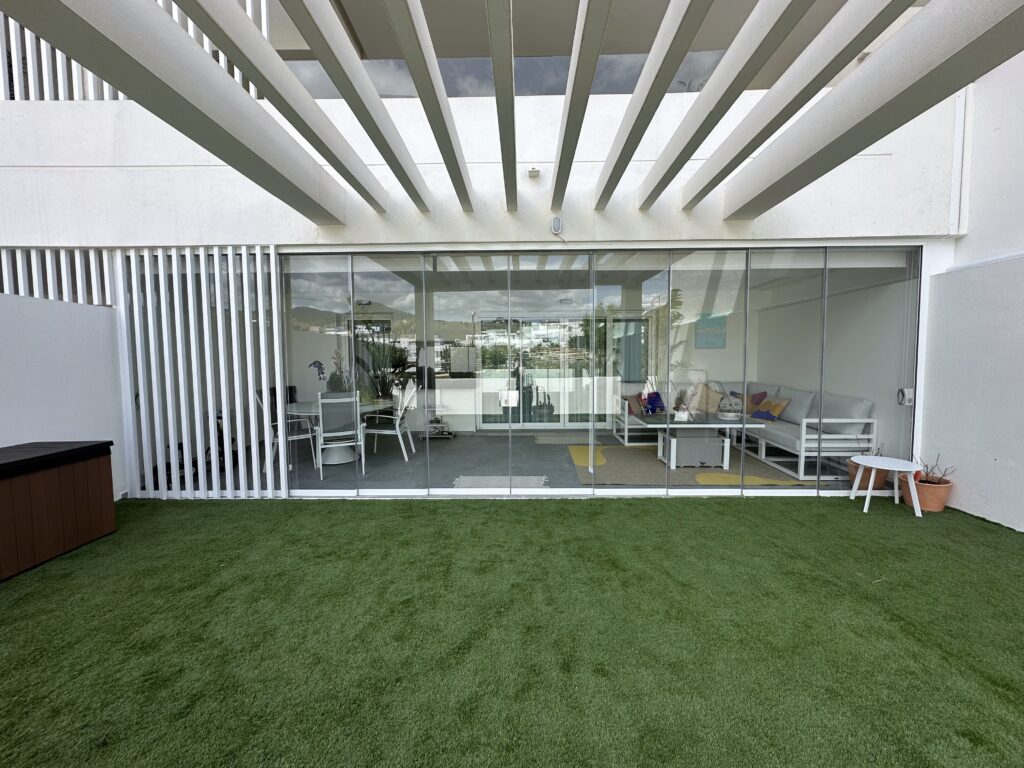
With frameless glass curtains, this process becomes particularly straightforward. Their folding mechanism allows easy access to both sides of the glass, reducing one of the practical difficulties traditionally associated with maintaining large, glazed surfaces.
It is important, however, never to clean glass when it is completely dry, since dust particles can create small marks or scratches as they move across the surface. Abrasive products and utensils capable of scratching or damaging the glass should also be avoided.
In this sense, cleaning is not merely an aesthetic operation. It is part of the relationship between the material and its environment: the better that relationship is managed, the more stable the behaviour of the system remains.
Durability
The durability of a glass enclosure depends both on the quality of its materials and on the way the system is cared for over time. The glass and aluminium profiles are designed to withstand everyday use and exposure to outdoor conditions.
Nevertheless, durability is not simply an inherent property of a material. It also emerges from the interaction between the material, its environment and the conditions under which it is used.
Small maintenance habits can therefore make a significant difference. Preventing dirt from accumulating, checking areas subject to frequent use and selecting appropriate cleaning products all help the system preserve its transparency, finish and ease of operation.
The objective is not to prevent change altogether — something that no outdoor system can achieve — but to ensure that change remains within conditions that do not compromise its function.
In this way, the enclosure maintains not only its appearance, but also the smooth and reliable behaviour expected from it in everyday use.
Maintenance
The maintenance of a glass enclosure is straightforward and does not require complicated procedures. Beyond the glass itself, attention should also be given to the other elements that make up the system, including aluminium profiles, tracks, rollers, magnets and drainage channels, depending on the installation.
The tracks should be kept clean, removing dust, leaves, small stones and any other residue that may accumulate through use. In frameless glass curtains, it is also advisable to inspect the folding areas and magnets. Small metallic particles can be attracted to the magnets and, over time, may affect the condition of the profile.
Lubricating the rollers at least once a year can also help maintain smooth and comfortable movement.
For retractable glass roofs and systems incorporating drainage channels, keeping the outlets clear is particularly important. Water must be able to escape freely, especially where trees or vegetation are close to the installation and leaves or other debris can accumulate.
Here again, maintenance can be understood as a question of conditions. A drainage system does not need to prevent rain; it needs to remain capable of responding to it. A sliding mechanism does not need to resist change indefinitely; it needs to continue moving correctly as conditions evolve.
A Simple Routine for Long-Term Performance
As you can see, maintaining a glass enclosure in good condition does not require great effort.
Regular cleaning, suitable products and a few simple periodic checks are generally enough to allow the system to remain clean, reliable and fully operational for many years.
The essential idea is therefore not to demand permanence from the system, but to understand its behaviour over time.
Glass, aluminium, rollers, tracks and drainage components are all part of the same system. Each responds differently to use, weather and time. Maintenance is what allows these different elements to continue working together within the conditions for which they were designed.
The objective is not to stop change.
It is to ensure that the system remains capable of responding to it.
At Acristalia, we have been creating unique spaces with our glass enclosure systems for more than 18 years. Discover our full range of terrace solutions and transform your outdoor space into a place you can enjoy throughout the year.
